2025 Hyundai Kona is a small but fun compact SUV option
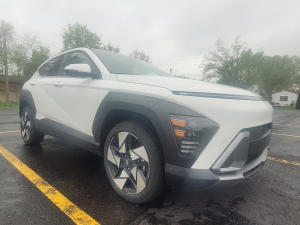
When it comes to SUVs, Hyundai is one brand with a stacked lineup that has all sizes covered — from those wanting a large three-row option all the way down to subcompact offerings.
One of the smaller and more affordable options from Hyundai (just one step up from the even smaller Hyundai Venue, but below the Hyundai Tucson) is the 2025 Hyundai Kona, a vehicle I recently had the chance to experience.
This funky looking but fun to drive commuter-friendly ride is among the better options for people looking for something on the smaller side, but isn’t underpowered. It received minor updates in 2025 after a fully updated version debuted in 2024.
There are plenty of rivals to consider — including the Chevy Trax and Mazda CX-30 to the Volkswagen Taos — but the Kona holds its own against them, especially on the performance end of things.
Tiny 2025 Mazda CX-30 delivers loads of driving enjoyment
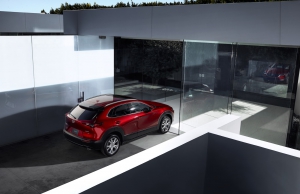
Small, fast and fun.
That’s the easiest way to describe the 2025 Mazda CX-30, a subcompact SUV which I recently got the chance to experience.
Specifically, I tested a 2025 Mazda CX-30 2.5 S Carbon Turbo model. The 2025 CX-30 sees little change from the previous model year.
The CX-30 is Mazda’s smallest SUV model, and it features a bold design, tiny interior, and a perky powerplant that packs a lot of punch into this small package.
As the market for tiny SUVs continues to be a popular one, especially with younger buyers who can’t afford or don’t want the behemoth SUVs of the past, vehicles like the CX-30 have a major opportunity for growth.
Read on to learn more about how this fun little ride compares in the segment — which includes offerings such as the Volkswagen Taos, Chevy Trailblazer, Hyundai Kona and more.
2025 Mazda CX-50 is a bold, upscale and capable compact SUV

Boldly designed while simultaneously upscale, the Mazda CX-50 occupies a unique position in the realm of compact SUVs.
Introduced a couple years back as a curious addition to Mazda’s lineup, offering a more rugged design and adventurous nature than Mazda’s popular CX-5 offering, the CX-50 has proven itself to be a worthy contender in the busy compact SUV segment.
Between its sharp looks, upscale interior features, tremendous handling and overall driving experience, this relative newcomer has emerged as a leading contender to meet the needs of SUV buyers.
New for 2025 in the CX-50’s third year is the arrival of a hybrid powertrain offering, as well as upgrades to standard tech features on all trim levels. It does a balancing act between pushing boundaries and maintaining Mazda’s reputation as one of the more upscale non-luxury brands.
Read on for a full breakdown of the 2025 Mazda CX-50, where it shines, and where improvements can be made as Mazda takes on heavyweight competitors like the Honda CR-V, Toyota RAV4, Hyundai Tucson and Kia Sportage.
2025 Mazda CX-5: Sharp looks and a sharp drive
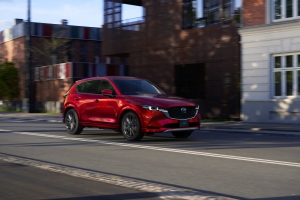
Yes Virginia, there is an SUV that’s actually fun to drive.
In fact, as we celebrate the holiday season, there’s actually a brand that is fully embracing a lineup that is far from bland, and aimed at people who love to drive well-handling cars that have some power under the hood.
I’m talking about Mazda, and more specifically it’s CX-5 compact SUV, the brand’s best-selling vehicle. There’s a ton of competition in this category, including some major top-sellers, but none of the CX-5’s top rivals can hold a candle to the genuinely fun and sporty drive quality offered by the CX-5 (which, FYI, is different than the CX-50 model that was more recently introduced by Mazda, and exists alongside the CX-5 in Mazda’s lineup).
I recently tested the 2025 Mazda CX-5 (a Carbon Turbo trim offering), and I’m back with a full report on how it measures up against the other small SUVs of today’s automotive world.
Though the current design is starting to get a bit long in the tooth, the CX-5’s looks, performance and fun factor are strong enough to make it stand out in the crowd vs. other less daring competitors in the segment.
2024 Kia Sportage delivers sharp design, roomy interior, off-road friendly model
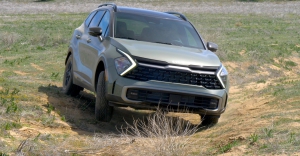
Kia’s SUV lineup has become one of the strongest in the automotive landscape, and that’s true not only because of larger vehicles like the Telluride, but also its smaller crossover options.
The compact Kia Sportage SUV is one of those offerings, slotting between Kia’s Seltos and Sorento in terms of size, and competes against some heavy hitters such as Ford Escape, Hyundai Tucson, Honda CR-V and Toyota RAV4.
I recently spent some time behind the wheel of a 2024 Kia Sportage X-Pro Prestige AWD, a more off-road friendly version of the Sportage, and I’m back with a full report on how it holds up in the compact SUV battlefield.
2024 Nissan Rogue updates tech, continues to impress

The numbers don’t lie.
And the numbers show that the Nissan Rogue is one of the top-selling vehicles in the country.
In terms of SUV sales, it is topped only by the Toyota RAV4, Tesla Model Y and Honda CR-V, and it has more impressive numbers than every other SUV available, with more than 270,000 sold in 2023.
Within Nissan’s lineup, it’s also by far the most popular option — doubling sales of the Altima.
The Rogue achieves this success by offering strong fuel mileage, an attractive look and a strong tech setup. It’s not trying to be the most exciting or sporty SUV, instead offering a solid, user-friendly overall package that will appeal to both families and individuals.
Upgrades have been made to the design and tech in the 2024 Nissan Rogue, including Google features now being built into its tech setup. I recently spent some time behind the wheel of the 2024 Rogue (a Platinum trim model), and I’m back with a full report.
2024 Volkswagen Tiguan is a roomy, fuel-efficient SUV option
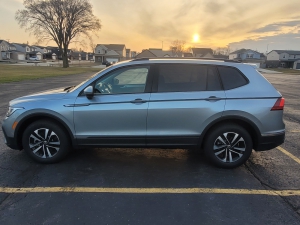
A global giant, Volkswagen continues to make its best effort to find its place in the SUV market in the United States.
One of their key offerings is the Tiguan, which slots in the middle of its SUV lineup between the smaller VW Taos and larger VW Atlas/Atlas Cross Sport options. It’s the highest-selling vehicle for Volkswagen in the U.S., with more than 71,000 Tiguans sold in 2023.
It’s competing with some strong vehicles, including Toyota RAV4, Kia Sportage, Honda CR-V, Nissan Rogue, Chevy Equinox, Ford Escape, Mazda’s CX-5 and CX-50, and more.
Standing out is tough in this segment, but VW pulls a bit of a wild card by offering the Tiguan with a third row, a feature most of the alternatives do not offer.
There are no major changes for 2024, as the main changes for the 2024 model are additional features becoming standard on lower trim levels. (Note: A completely new design is anticipated for the 2025 model year.)
I recently spent time behind the wheel of a base model 2024 Tiguan, and I’m back with a full report on how it holds up in today’s SUV landscape.
Bold, attractive 2024 Hyundai Tucson is a compact SUV standout

In recent years, Hyundai has asserted itself as a strong contender in many different vehicle categories, and that’s probably the most true in the compact SUV segment, where its Hyundai Tucson has regularly been a top-seller.
It’s the most popular Hyundai model in the U.S., with over 200,000 Tucsons sold in 2023, in large part due to its standout exterior design, roomy and upscale interior, plus comprehensive warranties and competitive pricing.
I recently tested a 2024 Hyundai Tucson XRT AWD model, which featured an attractive and aggressive design, and there are a variety of Tucson models offered — including hybrid options for the eco-friendly buyer.
Last fully redesigned in 2022, the 2024 Tucson features minor changes to the various trim levels and adds some tech and safety features, but maintains the strong features that have kept it so competitive in a segment featuring strong competition including the Honda CR-V, Nissan Rogue, Ford Escape and Toyota RAV4.
2023 Chevy Equinox features advanced technology, roomy interior
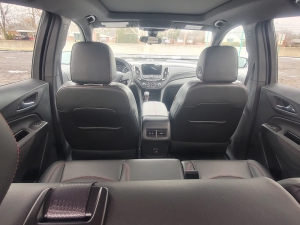
Looking at the automotive sales charts, one thing becomes pretty clear — often the vehicles that sell the most are far from the most flashy.
Such is the case with the 2023 Chevy Equinox, which is the second-best selling vehicle for Chevrolet behind only its Silverado pickup truck, and one of the top-selling small SUVs in the country.
Focused on a solid user experience, strong design and high-level tech features, the Equinox won’t be the fastest or the most head-turning model in the segment, but it’s clearly doing something right based on how the car-buying public is taking to it.
Changes to the Equinox for 2023 are minor, including a slight bump in horsepower, and updated paint scheme options.
I recently spent some time behind the week of a 2023 Chevy Equinox RS, and I’m back with a full report on how well it battles against a bevy of top competitors including Toyota’s RAV4, Honda’s CR-V and the Ford Escape.
2022 Volkswagen Taos is a roomy, high-tech subcompact SUV
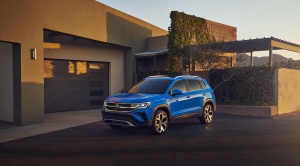
As the appetite for SUVs continues to grow, lineups continue to expand.
For Volkswagen, their latest entry slots in at the bottom of their lineup — a brand new subcompact SUV called the 2022 Volkswagen Taos.
It enters an expansive field of competitors including the Chevy Trailblazer, Honda HR-V, Mazda CX-30, Hyundai Kona, Kia Soul, Nissan Kicks, Jeep Renegade, Toyota C-HR and more.
I recently spent some time behind the wheel of a 2022 VW Taos, and I”m back with a full report.
This two-row, 5-passenger SUV impresses by being roomier than many of its rivals in terms of rear seat comfort and overall cargo space, the inclusion of solid tech and safety innovations, and an enjoyable driving experience courtesy of its turbocharged power plant.
News Categories

Popular Tags
Search Reviews by Make

AutoTechReviews is your home for In-depth reviews of the latest cars, trucks, and SUVs; information on all the emerging vehicle technology; and breaking news from the world of NASCAR and other motorsports.