2026 Hyundai Venue is a rare, affordable SUV

As vehicle prices continue to skyrocket, and payments reach new highs every year, it’s important to remember that some vehicles are still out there which are more basic and come at a price that won’t cost you a kidney.
One such vehicle is the Hyundai Venue, a subcompact SUV that’s about as affordable as you’ll find today.
I recently tested a 2026 Hyundai Venue SEL model, and I’m back with a full report on what you’ll get from this budget-friendly ride, which competes with other small SUVs such as the Kia Soul, Volkswagen Taos, Chevy Trax and Mazda CX-30.
2026 Mazda CX-70: 5 Things to Know
Some vehicles are hard to define, but the 2026 Mazda CX-70 is about as straightforward as it gets.
Take a 3-row Mazda CX-90, remove the third row, and you essentially have the CX-70. There are other minor differences, but for folks who don’t need a third row and want to focus on cargo space, the CX-70 is the Mazda model aimed at them.
With sharp and upscale design, both inside and out, and the traditionally powerful Mazda driving ability, the CX-70 makes a clear case as one of the best SUVs for sale today, and straddles the line between luxury and nonluxury vehicles.
Read on to learn 5 key things you need to know about the 2026 Mazda CX-70 — and how it compares to a variety of SUV alternatives.
2026 Mazda CX-50 hybrid offers both performance and strong fuel economy
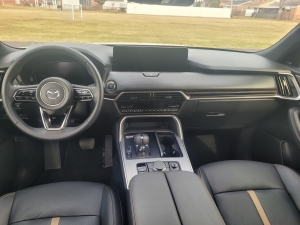
With fuel costs an issue that remains on top of the minds of so many Americans right now, hybrid vehicles are definitely having their moment. Without committing fully to an EV or a Plug-in Hybrid, the standard hybrid option allows drivers the opportunity to stretch their time between fill-ups without spending too much more on their vehicle.
One vehicle that’s relatively new to the hybrid market is the Mazda CX-50 hybrid, which enters its second year with the 2026 model. Only minor changes have been implemented for the 2026 model year, including standard wireless phone charging, updates to the grille design, and improvements to the transmission.
I recently had the chance to test this hybrid offering from Mazda, and I’m back with a full report on how it compares both within the Mazda lineup, and to rival hybrids from Toyota, Honda, Hyundai and others.
2026 Hyundai Ioniq 5: Sharp looks, fast ride, solid range
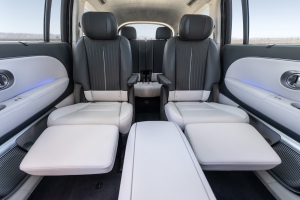
Depending on who you ask, EVs are either all the rage, or not ready for prime time.
But one thing can be agreed on by everyone: One important factor in EV success will be getting prices under control so more Americans can afford them.
Hyundai is aware of this, and has done their part to increase affordability on their most popular EV — the Ioniq 5 — trimming prices to make up for the loss of the federal EV tax credit.
I recently spent some time behind the wheel of the 2026 Hyundai Ioniq 5, and I’m back with a full report on how it holds up against rival EVs from Tesla (Model Y), Ford (Mustang Mach-E), Kia (EV6) and Volkswagen (ID.4).
2026 Mazda CX-50: 5 Things To Know
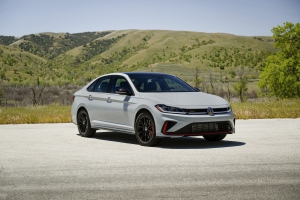
In the crowded field of compact SUVs, where the list of options is seemingly endless, one brand that continues to deliver strong offerings is Mazda, which offers its longtime best-seller the CX-5, as well as its newer, more rugged CX-50 offering.
I recently spent some time behind the wheel of a 2026 Mazda CX-50, and here are 5 things you should know before you decide whether this is a vehicle that belongs in your driveway.
1. Full of safety features
Safety is a top concern for all car buyers, especially those with families, and Mazda delivers all the major systems that the public has come to expect.
These include LATCH child safety seat anchors for those with small children, automatic emergency braking, a Tire Pressure Monitoring System, Lane Keep Assist and Lane Departure Warning, Rear Cross Traffic Alert, Blind Spot Monitoring, Traffic Sign Recognition and more.
A Driver Attention Alert tracks for drivers who are not being attentive to the road and warns that you might need a brake. And of course there’s a full array of air bags included. You can also opt for helpful 360-degree cameras.
Collectively, drivers of the CX-50 can be confident that the vehicle is doing everything it can to keep them safe and prevent accidents.
2026 Volvo XC90 is a stout, family-friendly and quietly luxurious 3-row SUV
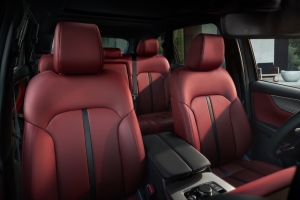
Sometimes less can be more. Take the case of Volvo, for example.
While the luxury automaker’s overall size as a car brand and total annual sales may be less than BMW, Mercedes-Benz, Audi, Lexus and other competitors, it consistently takes home awards (including honors in the recent 2026 Parents Best Family Car Awards), and for many families a Volvo is the only choice they will accept.
After driving the 2026 Volvo XC90, an impressive three-row SUV, I’m not surprised at this level of dedication. Between its strong design and family-friendly features, plus improved tech and Volvo’s traditional safety prowess, the brand has plenty to offer that would inspire such devotion.
Other offerings in this segment (including Audi Q7, Mercedes-Benz GLE, BMW X5, Lexus TX, Acura MDX, Lincoln Aviator and Genesis GV80) may be flashier at times, but Volvo ignores that type of hype and focuses on what counts most — making a vehicle that people will love and appreciate.
Read on for a full review of how the XC90 — which got a major design refresh in 2025 and mostly carries over for 2026, holds up against this stiff competition.
2026 Mazda CX-90 features high-class design, strong drive; offers plug-in hybrid option
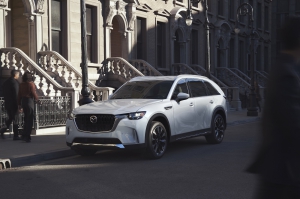
By Matt Myftiu
Autotechreviews.com
As families grow, so does the need for a larger vehicle.
And like most automakers, Mazda’s lineup includes a three-row SUV that caters to SUV buyers who need up to 8 seats for their growing families.
That offering would be the CX-90, which I recently tested in both a standard gas version, and a plug-in hybrid option (one of few PHEV options in this size of vehicle).
Mazda is unique in the auto world, as they aren’t quite a luxury brand, but their offerings are of a quality that stands above most of the competition in the “non-luxury” tier. Call it luxury-light or whatever you will, but Mazda typically has two calling cards for its lineup of vehicles
— A classy/upscale design
— A strong driving experience
The CX-90 can be cross-shopped with three-row SUVs from nonluxury brands like Toyota, Kia and Honda; while its top trim levels also have some ability to compete with luxury brands like Acura and Volvo.
Read on for a full review to see if that reputation holds up on the 2026 CX-90 lineup (which carries over from the 2025 offering without significant updates).
2026 Volvo XC40 is a classy little SUV with a smooth ride
Entering the realm of the luxury automobile may seem like a tall task for car buyers, but with brands like Volvo, it’s easier than you may imagine.
Take their subcompact SUV offering, the XC40, for example. Starting around the low $40K price range, it provides a foot in the door for people looking to step up on the class scale — as long as they’re good with limited space in the rear seats and in the cargo hold.
Volvo’s larger XC60 and XC90 SUVs are more spacious, but if you’re less concerned with the amount of space but still want the Volvo quality design, drive quality and safety features, the XC40 is a strong option to consider — and it competes well against other smaller SUV options in the class — including the Audi Q3, BMW X1 and Mercedes-Benz GLB, Acura ADX and Lincoln Corsair.
Read on for a full review on the XC40, which I recently had the opportunity to experience, to learn more about how it holds up vs. its rivals.
2026 Hyundai Ioniq 9 delivers classy look, strong performance and range in a three-row EV
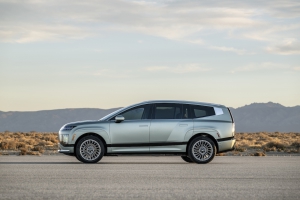
As the debate over the future of EVs continues, some companies are going big with their electric plans.
And in this case, I mean it literally, as Hyundai has debuted the 2026 Ioniq 9, a large, three-row, fully electric SUV that has few true rivals in terms of size among the electric landscape — which is dominated by smaller offerings.
This long-awaited offering’s closest competition is from Hyundai’s corporate relative Kia, which offers a similarly sized vehicle called the EV9. Outside of that, the only true competition are upscale offerings like the Rivian R1S, Volvo EX90 and Cadillac Vistiq.
Entering this level of the EV market means there is a commitment to electrification, and time will tell whether the U.S. public follows along and heads in this direction, but in the meantime Hyundai has unveiled a tremendous vehicle offering with a lot for potential buyers to love about it.
I recently spent some time with an Ioniq 9, which featured power, range and an attractive and family-friendly design. Read on for a full review of this bold new offering from Hyundai.
2026 Mazda CX-30 is a super sporty subcompact SUV

In the world of SUVs, the bigger alternatives that can pack in a large family get much of the headlines, but lurking in the background are some strong options for folks with a need for less space.
The subcompact SUV category is one that has a wide variety of options — from the Chevy Trax to Volkswagen Taos, Hyundai Kona, Kia Seltos and Buick Envista — but the one that stands about all others in the category is the Mazda CX-30.
I recently tested the 2026 Mazda CX-30 (a Turbo Premium Plus model), and it left a very strong impression with its powerful drive quality and upscale interior. Many people associate smaller vehicles with low power, but that’s far from the case with the CX-30.
Read on for a full review of the CX-30, which carries over mostly unchanged from the 2025 model.
News Categories

Popular Tags
Search Reviews by Make

AutoTechReviews is your home for In-depth reviews of the latest cars, trucks, and SUVs; information on all the emerging vehicle technology; and breaking news from the world of NASCAR and other motorsports.