
Matt M. Myftiu
Matt Myftiu has been a journalist for two decades with a focus on technology, NASCAR and autos.
Attractive and quick, 2026 K4 hatchback is a strong addition to Kia lineup
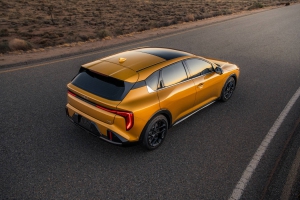
Like most of the Asian automakers, Kia has continued its commitment to the car market despite a rise in SUV prevalence worldwide.
In fact, they’re even growing one of their key car brands — with the introduction of the 2026 Kia K4 hatchback, which complements the sedan offering in the K4 compact car lineup.
I recently tested a 2026 Kia K4 hatchback GT-Line Turbo model, and I’m back with a full breakdown of how it holds up against fellow hatch competitors such as the Toyota Corolla, Honda Civic and Mazda3.
2026 Kia Carnival hybrid offers roomy and versatile interior, solid fuel mileage
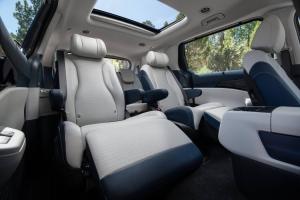
The debate of minivan vs. SUV rages, with many extolling the minivan’s virtues, and others preferring an SUV as their method of family transportation.
Both sides have solid arguments, but if you’re going to opt for a minivan, the 2026 Kia Carnival hybrid, which I recently tested, is one vehicle that should definitely be considered.
It combines the versatility and roomy interior of the standard Carnival with some additional fuel economy to keep you on the road longer between fill-ups. If you’re hauling the kids around the state and beyond on travel sports treks, for example, it’s really a no-brainer to consider this type of vehicle.
Read on for my full take on the 2026 Kia Carnival hybrid, which battles is a somewhat limited category — taking on primarily the hybrid-only Toyota Sienna, and to a lesser extent the Chrysler Pacifica plug-in hybrid.
2026 Hyundai Santa Cruz pairs unique design with a smooth, powerful ride
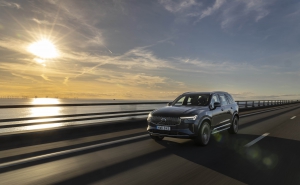
I’m a big fan of automakers being a bit adventurous in their designs, as it happens far too rarely.
One such example is the Hyundai Santa Cruz, which is a car-truck combo offering, taking a portion of the Hyundai Tucson SUV and adding a compact truck bed behind.
First launched for 2022, it’s still around for the 2026 model year, and I recently got to spend some time behind the wheel of a 2026 Santa Cruz.
Read on for a full report on how it holds up in this relatively small segment, where its only true rival is the Ford Maverick (semi-rivals include the Honda Ridgeline and Jeep Gladiator).
2026 Hyundai Venue is a rare, affordable SUV

As vehicle prices continue to skyrocket, and payments reach new highs every year, it’s important to remember that some vehicles are still out there which are more basic and come at a price that won’t cost you a kidney.
One such vehicle is the Hyundai Venue, a subcompact SUV that’s about as affordable as you’ll find today.
I recently tested a 2026 Hyundai Venue SEL model, and I’m back with a full report on what you’ll get from this budget-friendly ride, which competes with other small SUVs such as the Kia Soul, Volkswagen Taos, Chevy Trax and Mazda CX-30.
2026 Mazda CX-70: 5 Things to Know
Some vehicles are hard to define, but the 2026 Mazda CX-70 is about as straightforward as it gets.
Take a 3-row Mazda CX-90, remove the third row, and you essentially have the CX-70. There are other minor differences, but for folks who don’t need a third row and want to focus on cargo space, the CX-70 is the Mazda model aimed at them.
With sharp and upscale design, both inside and out, and the traditionally powerful Mazda driving ability, the CX-70 makes a clear case as one of the best SUVs for sale today, and straddles the line between luxury and nonluxury vehicles.
Read on to learn 5 key things you need to know about the 2026 Mazda CX-70 — and how it compares to a variety of SUV alternatives.
2026 Mazda CX-50 hybrid offers both performance and strong fuel economy
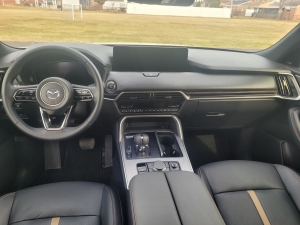
With fuel costs an issue that remains on top of the minds of so many Americans right now, hybrid vehicles are definitely having their moment. Without committing fully to an EV or a Plug-in Hybrid, the standard hybrid option allows drivers the opportunity to stretch their time between fill-ups without spending too much more on their vehicle.
One vehicle that’s relatively new to the hybrid market is the Mazda CX-50 hybrid, which enters its second year with the 2026 model. Only minor changes have been implemented for the 2026 model year, including standard wireless phone charging, updates to the grille design, and improvements to the transmission.
I recently had the chance to test this hybrid offering from Mazda, and I’m back with a full report on how it compares both within the Mazda lineup, and to rival hybrids from Toyota, Honda, Hyundai and others.
ARaymond Introduces Next-Generation UQDs for Data Center Liquid Cooling

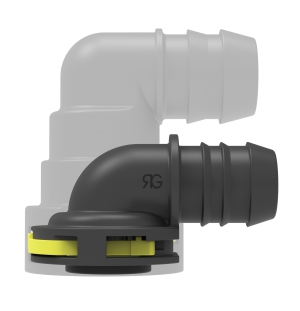
As artificial intelligence drives expansion of high-density computing and liquid-cooled data centers, ARaymond — a manufacturer of advanced fastening, assembly and fluid handling systems with its North American headquarters in Rochester Hills, Michigan — has introduced a new generation of Universal Quick Disconnects (UQDs) that is designed to help data center operators address growing demands for reliable, scalable and efficient fluid connections.
The new UQD portfolio from ARaymond — which has 40 years of fluid-handling experience and 160 years leading innovation in the fastener industry — uses advanced engineered polymer technology as an alternative to traditional metal designs, and builds upon ARaymond’s proven fluid-handling expertise, high-volume manufacturing capabilities, and the reliability required for mission-critical cooling applications.
"AI is driving a rapid expansion of liquid cooling, and data centers need to scale with no compromise on reliability," said Brian Holt, Technical Sales Engineer, ARaymond North America. "As connector volumes increase, every component matters, from weight of the rack to cleanliness of the coolant and ease of installation. ARaymond’s UQDs combine advanced polymer technology with proven dry-break expertise to help customers meet demands at scale."
2026 Volvo EX30 is a powerful, subcompact luxury EV
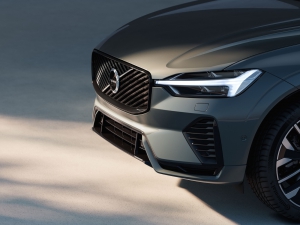
The big question with the growth of EVs is how can automakers make them relatively affordable. With so many new models coming in at or near the six-figure range, anyone who offers an EV that’s affordable in comparison is going to get some attention.
I recently tested one such vehicle, the subcompact luxury EV from Volvo called the EX30, and I’m back with a full report. Starting with a base price around $40K for its single-motor option, which is much lower than most luxury EVs, and close in price to several non-luxury EVs, it holds a unique place in the market.
This model returned for a second year in 2026, but unfortunately will not be back in the U.S. in 2027 (for a variety of reasons, including tariff impacts), so those who want to take one home are facing a short timeline. (It will continue to be sold in other countries)
2026 Hyundai Ioniq 5: Sharp looks, fast ride, solid range
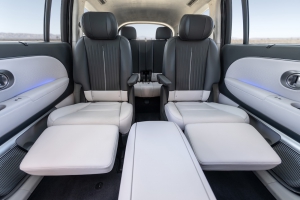
Depending on who you ask, EVs are either all the rage, or not ready for prime time.
But one thing can be agreed on by everyone: One important factor in EV success will be getting prices under control so more Americans can afford them.
Hyundai is aware of this, and has done their part to increase affordability on their most popular EV — the Ioniq 5 — trimming prices to make up for the loss of the federal EV tax credit.
I recently spent some time behind the wheel of the 2026 Hyundai Ioniq 5, and I’m back with a full report on how it holds up against rival EVs from Tesla (Model Y), Ford (Mustang Mach-E), Kia (EV6) and Volkswagen (ID.4).
2026 Hyundai Tucson plug-in hybrid offers sharp looks, strong fuel economy
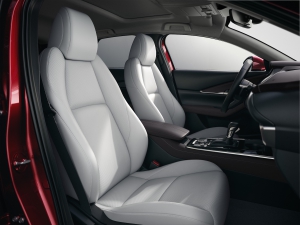
As automakers continue to stake their claims in the area between gas-only vehicles and full EVs, plug-in hybrids continue to play a role in filling the needs of drivers who don’t want to completely skip the gas station, but do want to limit how often they need to go there.
One company in the plug-in market is Hyundai, which offers multiple versions of its popular Tucson SUV — gas, hybrid and plug-in hybrid (PHEV).
I recently tested a 2026 Hyundai Tucson PHEV Limited model, and I’m back with a full report on how this vehicle competes in its segment vs. rival plug-ins from Toyota, Kia, Mitsubishi, and others.
News Categories

Popular Tags
Search Reviews by Make

AutoTechReviews is your home for In-depth reviews of the latest cars, trucks, and SUVs; information on all the emerging vehicle technology; and breaking news from the world of NASCAR and other motorsports.